The Daily Racing Form Gives You More Data Than Most Players Realize
The trick is knowing how to interpret it.
The Daily Racing Form gives you more data than most players realize. The trick is knowing how to interpret it.
Three Numbers Every Serious Horseplayer Should Understand
Beyer Speed Figures — One number. How fast the horse ran after adjusting for distance and track variant.
TimeformUS Pace Figures — Two numbers. Early speed and late energy, showing how the horse earned its figure.
Speed Rating + Track Variant — Often overlooked. It measures the raw performance against a par, then adjusts for track speed.
What Beyer Speed Figures Tell You
Most horseplayers know Beyer Speed Figures. They’ve been in the Daily Racing Form for decades and serve one purpose: how fast a horse ran the race after adjusting for distance and track variant.
But here’s the flaw:
- Beyers flatten a race into one number.
- They don’t tell you how the horse earned that figure — was it front-loaded with blazing fractions or a grinding closer’s finish?
- Two horses with identical Beyers can have completely opposite running styles.
Don’t just look at the numbers.
Learn what they mean.
That’s Where TimeformUS Pace Figures Come In
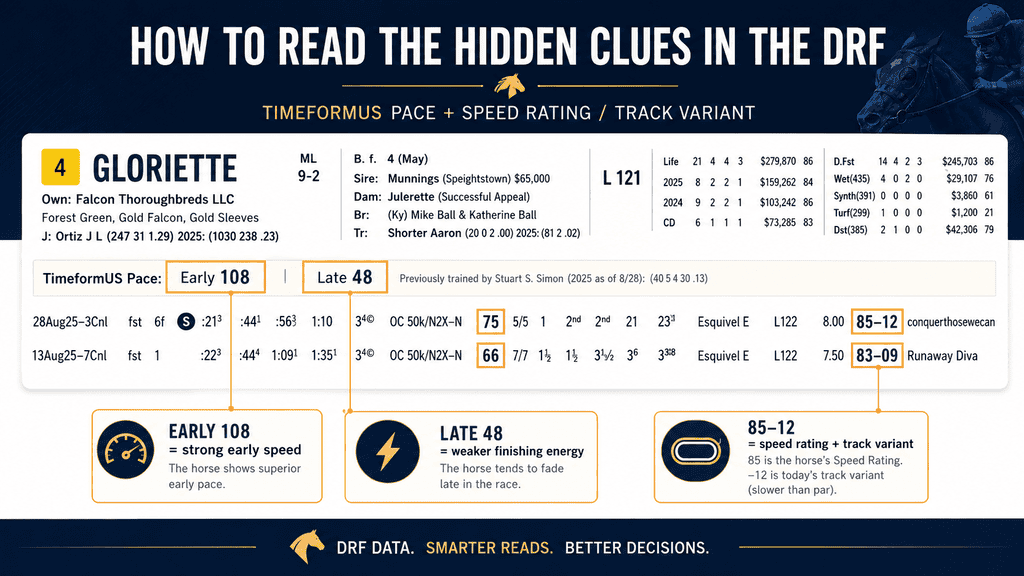
In every DRF past performance, you’ll see two pace numbers next to each horse:
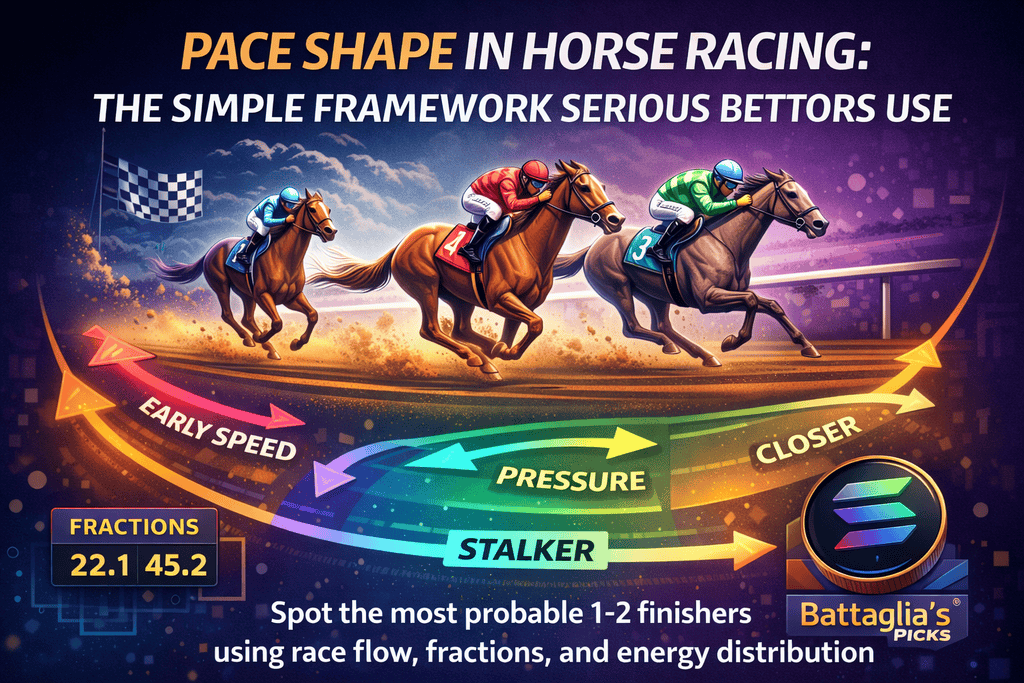
Early Pace — A measure of raw speed through the opening fractions.
Late Pace — A measure of finishing energy when others are slowing down.
Unlike Beyers, these are separate components, not rolled into one. That separation is crucial.
Now look at their Beyers:
Horse A: 82
Horse B: 82
Horse C: 82
On Beyers, they’re equal. On Timeform, they’re completely different animals.
What “85–12” Really Means
At the end of every running line, you’ll see something like 85–12.
The first number: 85
The horse’s raw speed rating for that race, on a 0–130 scale.
The second number: 12
The track variant, the adjustment made because the track was either playing fast or slow that day.
So a horse with an 85–12 earned a raw 85, but it was on a day the track was playing slower than normal. Adjusting that brings the performance closer to what the horse actually ran against par.
Here’s the kicker:
Beyers already incorporate variant adjustments. Speed ratings + variants let you see the adjustment yourself. Sometimes a “slow Beyer” isn’t the horse’s fault — the track was deep, cuppy, or dull.
The Real Edge Is Putting It Together
Combine that with Timeform pace shape and you’ll know not just how fast the horse ran, but how the race was run and whether the figure is trustworthy.
One number rarely tells the whole story.
The edge comes from understanding what the numbers are saying together.
Want This Type of Analysis Every Race Day?
The Ultimate Betting Advantage gives you expert selections, exacta-focused analysis, and disciplined race breakdowns powered by 40+ years of handicapping experience and AI-assisted insight.