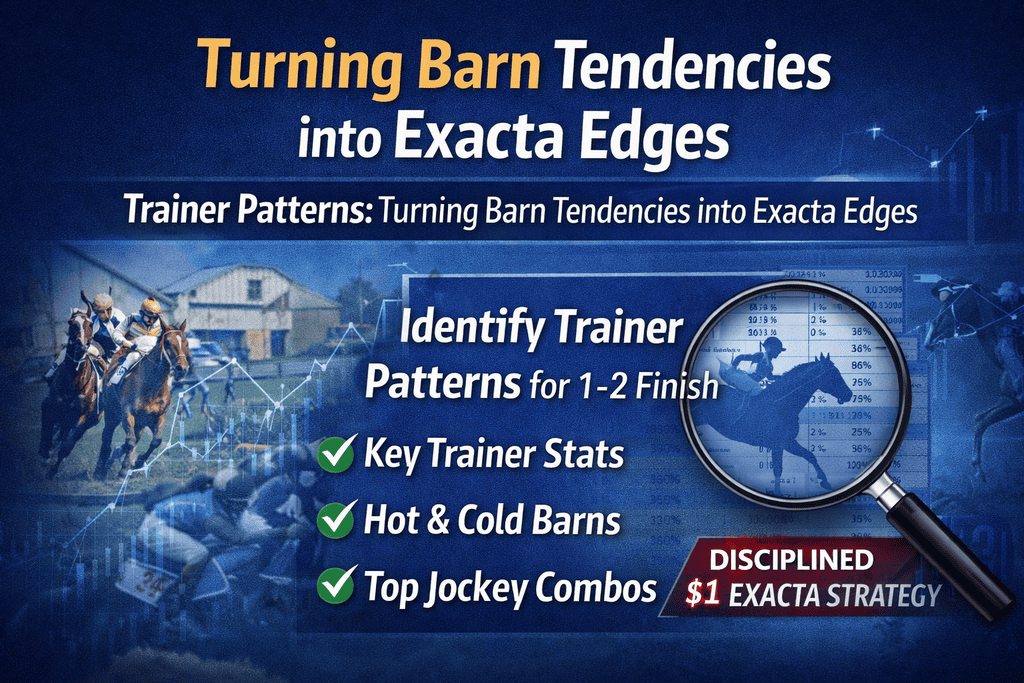
Using Pace and Class to Build Better Exactas
Most horseplayers chase raw speed or follow the crowd without a defined plan. That approach leaves money on the table and fills exacta tickets with guesswork instead of logic.
Smarter exacta betting comes from understanding two core forces that shape every race: pace and class.
When you combine precise pace analysis with disciplined class evaluation, you stop guessing and start constructing calculated $1 exacta boxes built for long-term profitability.
Let’s break down how pace shape, class moves, and false favorite traps create an edge that most bettors overlook.
Understanding Pace in Any Race
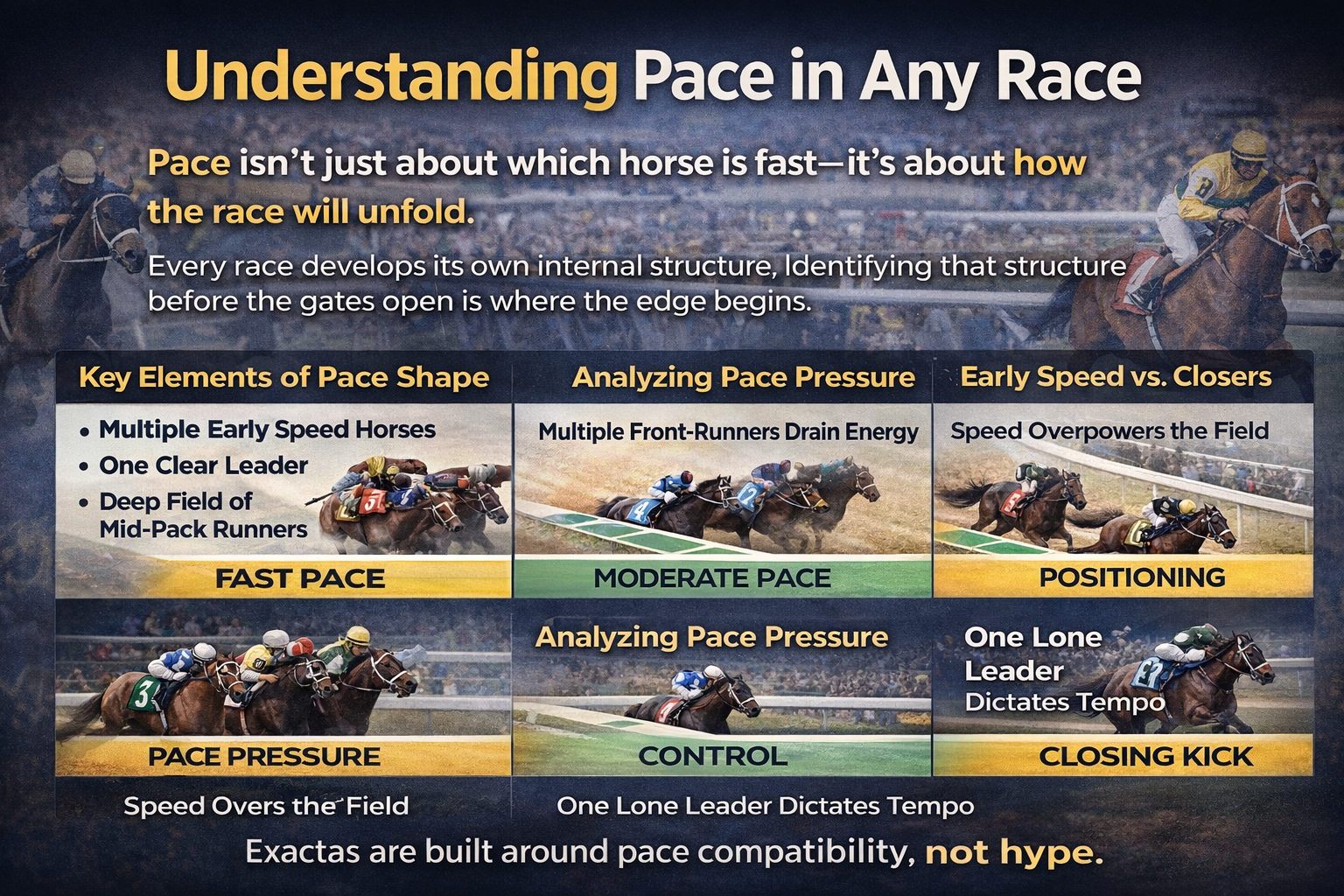
Pace isn’t just about which horse is fast — it’s about how the race will unfold.
Every race develops its own internal structure. Identifying that structure before the gates open is where the edge begins.
Key Elements of Pace Shape
Pace shape tells you which running styles are advantaged.
-
Multiple early speed horses? Expect contested fractions.
-
One clear leader? That horse controls the tempo.
-
Deep field of mid-pack runners? Positioning becomes critical.
Some horses need a fast pace to unleash their closing kick. Others dominate when allowed to control moderate fractions. The key is identifying which horses fit the projected race flow — not just which ones look fast on paper.
Exactas are built around pace compatibility, not hype.
Analyzing Pace Pressure
Pace pressure determines sustainability.
When several front-runners vie for position, early energy expenditure rises. That pressure often weakens leaders late and elevates disciplined stalkers or closers.
Conversely, when early speed is isolated, that lone front-runner can dictate terms from start to finish.
Understanding pressure dynamics prevents you from backing tired speed — or missing a loose leader.
Early Speed vs. Closers
Early speed creates opportunity — but only under the right conditions.
Closers capitalize when the front end softens.
Front-runners dominate when pace pressure is light.
The key isn’t choosing one style over another — it’s identifying which style is positioned to thrive today, in this specific field.
Mastering Class in Horse Racing
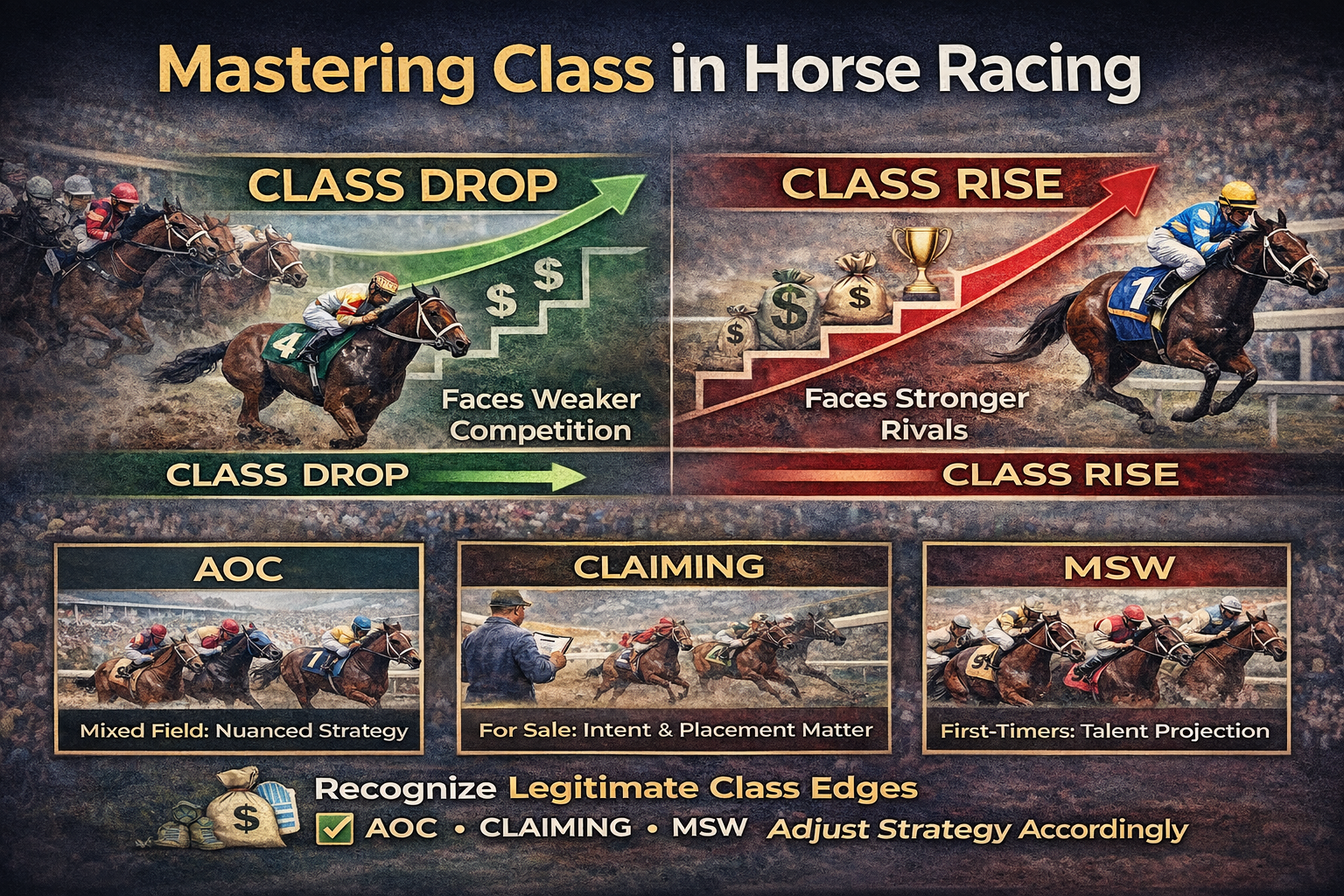
Next, we tackle class—another crucial element in predicting outcomes. Class determines a horse’s competition level.
Class Drops and Class Rises
A class drop places a horse against weaker competition.
A class rise tests a horse against stronger rivals.
The market often overreacts to class moves without evaluating whether the horse actually belongs at that level.
A well-spotted class dropper with competitive figures can be an exacta anchor.
A horse stepping up without proven ability often becomes an overbet liability.
Recognizing legitimate class edges separates disciplined bettors from casual ones.
Understanding Race Types
Different race conditions demand different evaluation standards:
-
Allowance Optional Claiming (AOC) – mixed conditions create nuanced class comparisons.
-
Claiming races – intent and placement matter.
-
Maiden Special Weight (MSW) – talent projection and development patterns are critical.
Each condition alters how you interpret pace and class.
Exacta construction must adjust accordingly.
Crafting Smarter Exacta Combinations
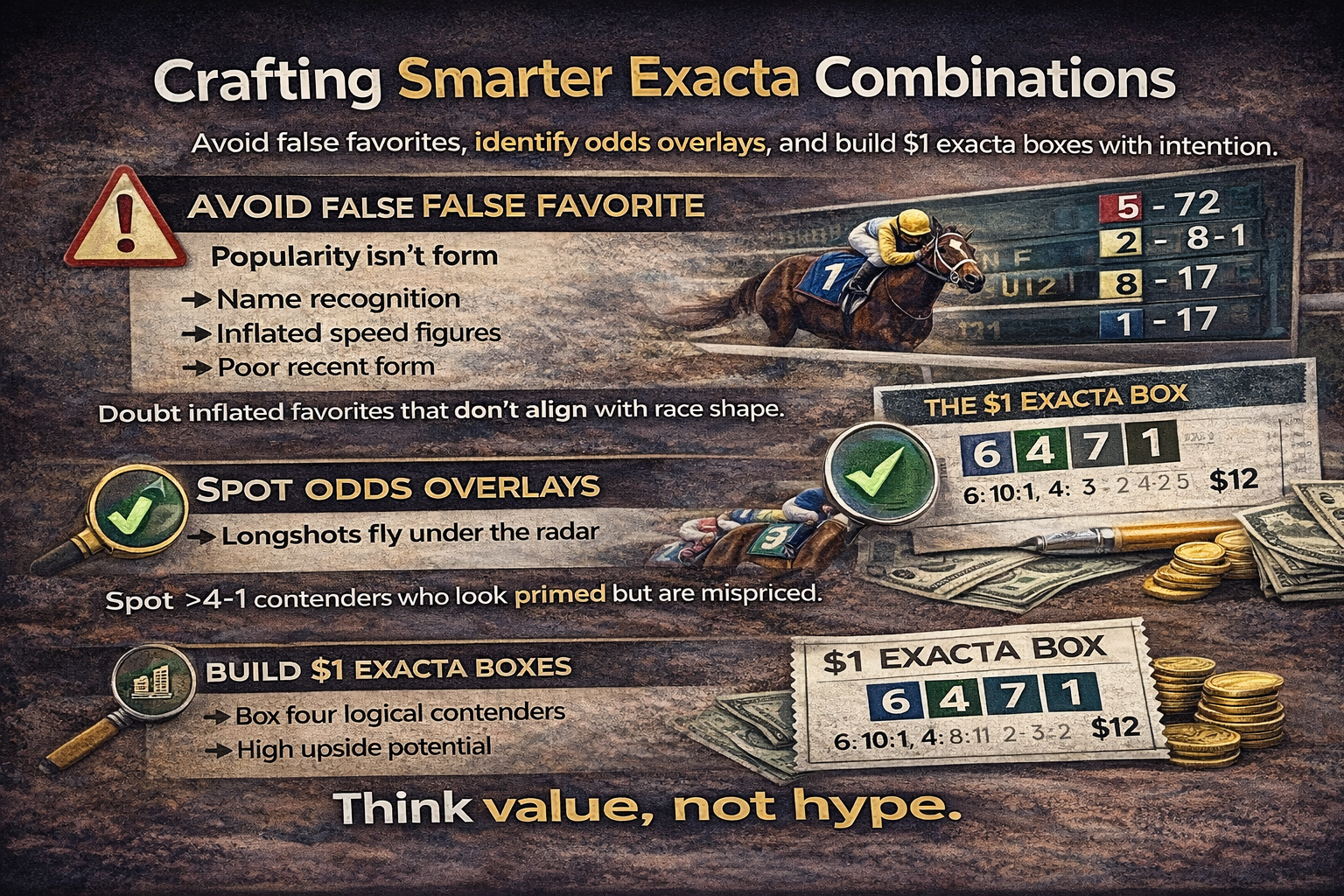
Once pace and class are evaluated correctly, you can structure a ticket with intention.
Avoiding the False Favorite
False favorites are overbet runners whose reputation exceeds current form.
They may:
-
Benefit from name recognition
-
Show inflated speed figures
-
Be stepping into unfavorable pace scenarios
When a favorite doesn’t align with the projected pace or class structure, they weaken your ticket.
Disciplined omission can be more powerful than inclusion.
Identifying Odds Overlays
An overlay occurs when a horse’s odds exceed its true probability of finishing 1–2.
This happens when:
-
The public misreads pace
-
Class moves are misunderstood
-
Running style is undervalued
Exactas thrive on mispriced contenders, not obvious selections.
Implementing the $1 Exacta Box
A structured $1 exacta box built around four carefully selected horses allows:
-
Controlled exposure
-
Logical coverage
-
High upside potential
Instead of spreading randomly, you’re isolating the most probable 1–2 finishers based on pace and class compatibility.
That’s structure — not speculation.
The Bottom Line
Successful exacta betting isn’t about chasing speed or hoping for chaos.
It’s about:
-
Understanding pace dynamics
-
Evaluating class properly
-
Avoiding public traps
-
Building disciplined combinations
This framework applies to every circuit, every meet, every field.
When you bet with structure, you stop guessing.
And over time, structure beats instinct.
Join the Ultimate Membership
Inside the Ultimate Betting Advantage Membership, you’ll see this framework applied daily — full-card analysis, structured exacta builds, and disciplined Top 4 rankings designed for serious horseplayers.
If you’re ready to stop guessing and start betting with a plan, step inside.